
Ch 1Exploration: Entering the World of Secondary Scienceअन्वेषण — माध्यमिक विज्ञान के संसार में प्रवेशExploration: Secondary Science ki duniya mein entry
How science really works — models, precise language and units, maths as a language, laws vs theories vs principles, predictions and estimation — in simple words.विज्ञान असल में कैसे काम करता है — मॉडल, सटीक भाषा और मात्रक, भाषा के रूप में गणित, नियम-सिद्धांत, पूर्वानुमान और आकलन — आसान भाषा में।Science asal mein kaise kaam karta hai — models, sahi bhasha aur units, maths ek bhasha ki tarah, laws vs theories vs principles, predictions aur estimation — aasaan bhasha mein.
Didn’t understand a paragraph? Tap it (or its Explain button) → Hindi / Hinglish / Simple English.कोई पैराग्राफ़ समझ नहीं आया? उस पर (या समझें बटन पर) टैप करें → अंग्रेज़ी / हिंग्लिश।Koi paragraph samajh nahi aaya? Us par (ya Samjho button par) tap kijiye → Hindi / English.
Choose your levelअपना स्तर चुनिएApna level chuniye
Never really got this chapter? Perfect, start here. 7 short steps. Each one opens with a scene from your own day, shows you a picture, explains every new word, and ends with a one-line trick. No marks, no pressure.यह अध्याय कभी ठीक से समझ नहीं आया? बढ़िया, यहीं से शुरू कीजिए। 7 छोटे कदम। हर कदम आपकी रोज़ की ज़िंदगी के एक सीन से शुरू होता है, एक चित्र दिखाता है, हर नया शब्द समझाता है, और एक लाइन की ट्रिक पर ख़त्म होता है। कोई नंबर नहीं, कोई दबाव नहीं।Ye chapter kabhi theek se samajh nahi aaya? Badhiya, yahin se shuru kijiye. 7 chhote steps. Har step aapki roz ki zindagi ke ek scene se shuru hota hai, ek picture dikhata hai, har naya word samjhata hai, aur ek line ki trick pe khatam hota hai. Koi number nahi, koi pressure nahi.
The whole chapter in one question: how does science know what it knows?पूरा अध्याय एक सवाल में: विज्ञान को जो पता है, वह उसे कैसे पता चलता है?Poora chapter ek sawaal mein: science ko jo pata hai, woh use kaise pata chalta hai?
🧱 First, 3 words you will need🧱 पहले ये 3 शब्द समझ लीजिए🧱 Pehle ye 3 words samajh lijiye
- Observation = noticing something carefully with your senses or an instrument. Not just seeing, but noticing. (You 'see' your classroom daily; you observe it when you count how many fans are actually working.)प्रेक्षण (observation) = अपनी इंद्रियों या किसी यंत्र से किसी चीज़ को ध्यान से देखना और नोटिस करना। सिर्फ़ देखना नहीं, ग़ौर करना। (क्लास आप रोज़ 'देखते' हैं; प्रेक्षण तब होता है जब आप गिनते हैं कि कितने पंखे सच में चल रहे हैं।)Observation = apni senses ya kisi instrument se cheez ko dhyaan se notice karna. Sirf dekhna nahi, gaur karna. (Class aap roz 'dekhte' ho; observe tab karte ho jab ginte ho ki kitne pankhe sach mein chal rahe hain.)
- Quantity = anything you can measure and write as a number: length, mass, time, temperature. Measurement = comparing a quantity with a fixed standard called a unit (metre, kilogram, second).राशि (quantity) = जिसे मापकर संख्या में लिखा जा सके: लंबाई, द्रव्यमान, समय, तापमान। मापन (measurement) = किसी राशि की तुलना एक तय मानक से करना, जिसे मात्रक (unit) कहते हैं (मीटर, किलोग्राम, सेकंड)।Quantity = jo cheez naapi ja sake aur number mein likhi ja sake: length, mass, time, temperature. Measurement = quantity ko ek fixed standard se compare karna, jise unit kehte hain (metre, kilogram, second).
- Evidence = facts anyone can check: observations and measurements, not opinions. Science goes with evidence, not with “just trust me”.प्रमाण (evidence) = ऐसे तथ्य जिन्हें कोई भी जाँच सके: प्रेक्षण और माप, राय नहीं। विज्ञान प्रमाण के साथ चलता है, “बस मान लो” के साथ नहीं।Evidence = aise facts jinhe koi bhi check kar sake: observations aur measurements, opinion nahi. Science evidence ke saath chalta hai, “bas maan lo” ke saath nahi.
1Models: keep what matters, skip the restमॉडल: काम की बात रखो, बाकी छोड़ोModels: kaam ki baat rakho, baaki chhodo
🎬 Scene from real life🎬 रोज़ की ज़िंदगी से एक सीन🎬 Real life ka scene
📍 The map app on your phone does not show every tree, cow and samosa stall on your way home. Just roads and one blue dot. And still it gets you home. That map is a model.📍 फ़ोन का मैप ऐप रास्ते का हर पेड़, हर गाय और हर समोसे वाला नहीं दिखाता। बस सड़कें और एक नीला बिंदु। फिर भी आपको घर पहुँचा देता है। वह मैप एक मॉडल है।📍 Phone ka map app raaste ka har ped, har gaay aur har samose wala nahi dikhata. Bas sadkein aur ek blue dot. Phir bhi aapko ghar pahuncha deta hai. Woh map ek model hai.
Same street, 2D and 3Dवही गली, 2D और 3D मेंWahi gali, 2D aur 3D meinReal worldअसली दुनियाAsli duniyaMap = modelनक्शा = मॉडलMap = modelLeft of the gold line: the real street, every roof, water tank, tree and car. Right: the map app keeps only roads, you (blue dot) and home. Same place, simplified on purpose: that is a model.सुनहरी लाइन के बाईं ओर: असली गली, हर छत, पानी की टंकी, पेड़ और गाड़ी। दाईं ओर: मैप ऐप बस सड़कें, आप (नीला डॉट) और घर रखता है। जगह वही, जानबूझकर आसान की हुई: यही मॉडल है।Golden line ke left: asli gali, har chhat, paani ki tanki, ped aur gaadi. Right: map app bas sadkein, aap (blue dot) aur ghar rakhta hai. Jagah wahi, jaan-boojhkar simple ki hui: yahi model hai.
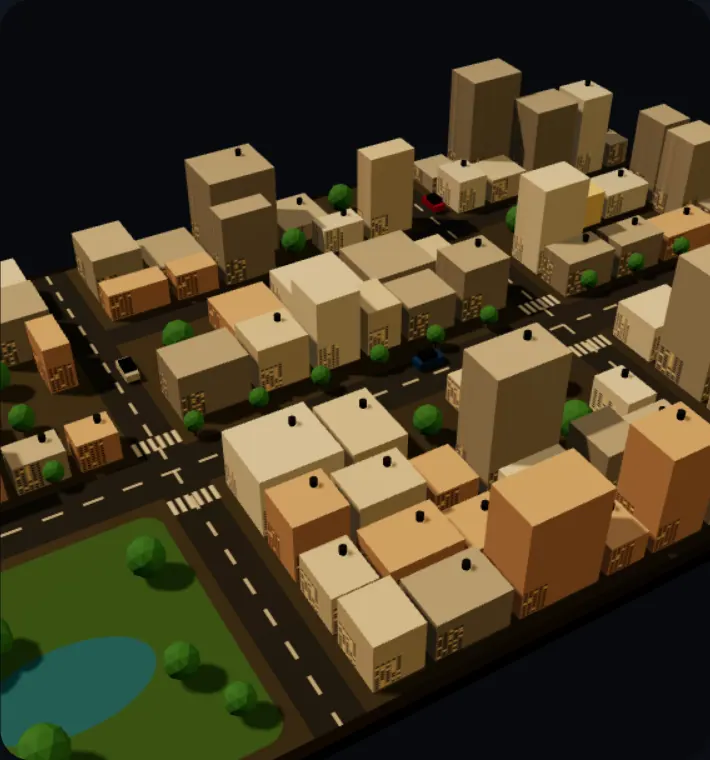
Loading the 3D model…3D मॉडल लोड हो रहा है…3D model load ho raha hai…
The same street as a 3D model. Drag to turn it. Tap “Map view”: buildings, trees and cars flatten away, and only roads, you (blue dot) and home stay. That is exactly what a model does.वही गली 3D मॉडल में। उँगली से घुमाइए। “नक्शा देखें” दबाइए: इमारतें, पेड़ और गाड़ियाँ हट जाती हैं, बस सड़कें, आप (नीला डॉट) और घर बचते हैं। मॉडल ठीक यही करता है।Wahi gali 3D model mein. Ungli se ghumaiye. “Map view” dabaiye: buildings, ped aur gaadiyan hat jaati hain, bas sadkein, aap (blue dot) aur ghar bachte hain. Model bilkul yahi karta hai.
A model is a simplified picture of something real, which keeps only the parts that matter for your question. Nature is far too detailed to study all at once, so scientists simplify on purpose.मॉडल किसी असली चीज़ का सरल रूप है, जिसमें सिर्फ़ वही बातें रखी जाती हैं जो आपके सवाल के लिए ज़रूरी हैं। प्रकृति इतनी बारीक है कि सब कुछ एक साथ पढ़ना संभव नहीं, इसलिए वैज्ञानिक जानबूझकर चीज़ों को सरल करते हैं।Model kisi asli cheez ka simple roop hai, jismein sirf wahi baatein rakhi jaati hain jo aapke sawaal ke liye zaroori hain. Nature itna detailed hai ki sab kuch ek saath padhna possible nahi, isliye scientists jaan-boojhkar cheezon ko simple karte hain.
Your way home, as a model. Question: which turns take me home? Keep: the roads, the turns, where you are (blue dot) and where home is. Ignore: the colour of every house, the trees, the parked scooters. The samosa stall smells great, but it does not change the route. 😄घर का रास्ता, मॉडल की तरह। सवाल: किन मोड़ों से घर पहुँचूँगा? रखो: सड़कें, मोड़, आप कहाँ हो (नीला बिंदु) और घर कहाँ है। छोड़ो: हर घर का रंग, पेड़, खड़ी स्कूटी। समोसे की खुशबू अच्छी है, पर उससे रास्ता नहीं बदलता। 😄Ghar ka raasta, model ki tarah. Sawaal: kin turns se ghar pahunchunga? Rakho: sadkein, turns, aap kahan ho (blue dot) aur ghar kahan hai. Chhodo: har ghar ka rang, ped, khadi scooty. Samose ki khushboo achhi hai, par usse raasta nahi badalta. 😄
When you decide what to ignore, you are making an assumption (something you take as true to keep the problem simple, like “every road is open today”). Ignoring small things is not a mistake; it is a choice. If you need more accuracy, you add things back, like live traffic or a closed road. That is exactly what the map app does when a road turns red.जब आप तय करते हैं कि क्या छोड़ना है, तो आप एक धारणा (assumption) बनाते हैं (सवाल आसान रखने के लिए कुछ सच मान लेना, जैसे “आज सारी सड़कें खुली हैं”)। छोटी बातें छोड़ना गलती नहीं, एक सोचा-समझा चुनाव है। ज़्यादा सटीक जवाब चाहिए तो इन्हें वापस जोड़ते हैं, जैसे लाइव ट्रैफ़िक या बंद सड़क। मैप ऐप में सड़क का लाल हो जाना यही है।Jab aap decide karte ho ki kya chhodna hai, to aap ek assumption banate ho (sawaal simple rakhne ke liye kuch sach maan lena, jaise “aaj saari sadkein khuli hain”). Chhoti baatein chhodna galti nahi, ek socha-samjha choice hai. Zyada accurate answer chahiye to inhe wapas jodte hain, jaise live traffic ya band sadak. Map app mein sadak ka laal ho jaana yahi hai.
Models you will meet in Class 9: a moving car drawn as a dot, atoms drawn as balls, a cell drawn as a labelled diagram, the Earth drawn as layers. Tap 3D on the street picture above: the same street turns into a 3D model you can rotate, and “Map view” flattens it into the map.कक्षा 9 में मिलने वाले मॉडल: चलती कार को एक बिंदु मानना, परमाणुओं को गेंदें, कोशिका को नामांकित चित्र, पृथ्वी को परतें। ऊपर वाली गली के चित्र में 3D दबाइए: वही गली 3D मॉडल बन जाती है जिसे आप घुमा सकते हैं, और “नक्शा देखें” उसे नक्शे में बदल देता है।Class 9 mein milne wale models: chalti car ko ek dot maanna, atoms ko balls, cell ko labelled diagram, Earth ko layers. Upar wali gali ki picture mein 3D dabaiye: wahi gali 3D model ban jaati hai jise aap ghuma sakte ho, aur “Map view” use map mein badal deta hai.
💡 Remember-it trick💡 याद रखने वाली ट्रिक💡 Yaad rakhne wala trick
Model = keep what matters, mute the rest.मॉडल = काम की बात रखो, बाकी को म्यूट करो।Model = kaam ki baat rakho, baaki ko mute karo.
⚡ Quick check (no marks, just you)⚡ झटपट जाँच (कोई नंबर नहीं)⚡ Quick check (koi number nahi)
In a model of a running train for a speed question, should you include the colour of the seats?ट्रेन की चाल वाले सवाल के मॉडल में क्या सीटों का रंग शामिल करेंगे?Train ki speed wale sawaal ke model mein kya seats ka rang include karoge?
HintसंकेतHint
Does seat colour change how fast the train moves?क्या सीट का रंग ट्रेन की चाल बदलता है?Kya seat ka rang train ki speed badalta hai?
Answerउत्तरAnswer
No. Seat colour does not affect speed, so a good model leaves it out.नहीं। सीट का रंग चाल पर असर नहीं डालता, इसलिए अच्छा मॉडल इसे छोड़ देता है।Nahi. Seat ka rang speed pe asar nahi daalta, isliye achha model ise chhod deta hai.
Your friend says, “The map app ignored the speed breakers, so it is a bad model.” Is that right?दोस्त कहता है, “मैप ऐप ने स्पीड ब्रेकर नहीं दिखाए, इसलिए वह खराब मॉडल है।” क्या यह सही है?Dost kehta hai, “Map app ne speed breaker nahi dikhaye, isliye woh kharab model hai.” Kya ye sahi hai?
HintसंकेतHint
Was leaving it out a mistake or a choice?छोड़ना गलती थी या चुनाव?Chhodna galti tha ya choice?
Answerउत्तरAnswer
Not right. Leaving out a small detail is a deliberate choice to keep it simple. For more accuracy, you add it back.सही नहीं। छोटी बात को छोड़ना जानबूझकर किया गया चुनाव है ताकि सवाल आसान रहे। ज़्यादा सटीकता चाहिए तो उसे वापस जोड़ते हैं।Sahi nahi. Chhoti baat ko chhodna jaan-boojhkar kiya gaya choice hai taaki sawaal simple rahe. Zyada accuracy chahiye to use wapas jodte hain.
2The language of science: words, symbols, unitsविज्ञान की भाषा: शब्द, प्रतीक, मात्रकScience ki bhasha: words, symbols, units
🎬 Scene from real life🎬 रोज़ की ज़िंदगी से एक सीन🎬 Real life ka scene
🥔 Mom: “Bring 2 kilo potatoes.” You come back with 2 potatoes. The number was right. The unit went missing. Dinner is now in danger.🥔 मम्मी: “दो किलो आलू ले आना।” आप दो आलू लेकर लौटे। संख्या सही थी, मात्रक ग़ायब हो गया। अब डिनर ख़तरे में है।🥔 Mummy: “Do kilo aaloo le aana.” Aap do aaloo le ke laut aaye. Number sahi tha, unit gayab ho gaya. Ab dinner khatre mein hai.
Same number 2. Different unit, very different dinner.संख्या वही 2, मात्रक अलग, तो खाना भी बिल्कुल अलग।Number wahi 2. Unit alag, toh dinner bhi bilkul alag.
In daily life, words like force, work or cell can mean many things (“phone cell”, “so much work today”). In science each one has one fixed meaning, so that a student in Lucknow and a scientist in Japan understand exactly the same thing.रोज़ की बातचीत में बल, कार्य या सेल जैसे शब्दों के कई मतलब होते हैं (“फ़ोन का सेल”, “आज बहुत काम है”)। विज्ञान में हर शब्द का एक तय मतलब होता है, ताकि लखनऊ का विद्यार्थी और जापान का वैज्ञानिक बिल्कुल एक ही बात समझें।Roz ki baat-cheet mein force, work ya cell jaise words ke kai matlab hote hain (“phone ka cell”, “aaj bahut kaam hai”). Science mein har word ka ek fixed matlab hota hai, taaki Lucknow ka student aur Japan ka scientist bilkul ek hi baat samjhein.
A symbol is a short letter that stands for a quantity: m for mass, v for velocity (speed in a given direction), F for force, I for electric current. Some come from old languages: the speed of light is c, from the Latin word celeritas (swiftness). Its value is fixed as exactly 299 792 458 metres per second.प्रतीक (symbol) एक छोटा अक्षर है जो किसी राशि के लिए लिखा जाता है: द्रव्यमान के लिए m, वेग (किसी दिशा में चाल) के लिए v, बल के लिए F, विद्युत धारा के लिए I। कुछ प्रतीक पुरानी भाषाओं से आए हैं: प्रकाश की चाल c है, लैटिन शब्द celeritas (तेज़ी) से। इसका मान ठीक 299 792 458 मीटर प्रति सेकंड तय है।Symbol ek chhota letter hai jo kisi quantity ke liye likha jaata hai: mass ke liye m, velocity (kisi direction mein speed) ke liye v, force ke liye F, electric current ke liye I. Kuch symbols purani bhashaon se aaye hain: light ki speed c hai, Latin word celeritas (tezi) se. Iski value exactly 299 792 458 metre per second fixed hai.
A unit tells you “5 of what?”. 5 minutes, 5 km and 5 kg are totally different things. The world agreed on one set called SI units (the International System), for example metre (m) for length, kilogram (kg) for mass, second (s) for time. Same units everywhere means no confusion, in labs and at the vegetable shop.मात्रक (unit) बताता है “5 क्या?”। 5 मिनट, 5 किमी और 5 किलो बिल्कुल अलग चीज़ें हैं। पूरी दुनिया ने एक सेट पर सहमति बनाई जिसे SI मात्रक (अंतरराष्ट्रीय पद्धति) कहते हैं, जैसे लंबाई के लिए मीटर (m), द्रव्यमान के लिए किलोग्राम (kg), समय के लिए सेकंड (s)। हर जगह एक जैसे मात्रक, तो कोई गड़बड़ नहीं, लैब में भी और सब्ज़ी की दुकान पर भी।Unit batata hai “5 kya?”. 5 minute, 5 km aur 5 kg bilkul alag cheezein hain. Poori duniya ne ek set pe agree kiya jise SI units (International System) kehte hain, jaise length ke liye metre (m), mass ke liye kilogram (kg), time ke liye second (s). Har jagah same units, to koi confusion nahi, lab mein bhi aur sabzi ki dukaan pe bhi.
Why it is serious: a passenger plane once ran short of fuel mid-air because the fuel was worked out in pounds where kilograms were needed. The pilots glided it down safely, but one unit mix-up nearly caused a disaster.यह कितना गंभीर है: एक बार एक यात्री विमान का ईंधन हवा में ही कम पड़ गया, क्योंकि ईंधन का हिसाब किलोग्राम की जगह पाउंड में लगा दिया गया था। पायलटों ने उसे ग्लाइड करके सुरक्षित उतार लिया, पर एक मात्रक की गड़बड़ से बड़ा हादसा होते-होते बचा।Ye kitna serious hai: ek baar ek passenger plane ka fuel hawa mein hi kam pad gaya, kyunki fuel ka hisaab kilogram ki jagah pound mein laga diya gaya tha. Pilots ne use glide karke safely utaar liya, par ek unit ki gadbad se bada haadsa hote-hote bacha.
💡 Remember-it trick💡 याद रखने वाली ट्रिक💡 Yaad rakhne wala trick
A number without its unit is half a sentence. 2 kg ≠ 2 potatoes.मात्रक के बिना संख्या अधूरी बात है। 2 किलो ≠ 2 आलू।Unit ke bina number adhoori baat hai. 2 kilo ≠ 2 aaloo.
⚡ Quick check (no marks, just you)⚡ झटपट जाँच (कोई नंबर नहीं)⚡ Quick check (koi number nahi)
“The table is 2 long.” What is missing?“मेज़ 2 लंबी है।” इसमें क्या कमी है?“Table 2 lambi hai.” Ismein kya kami hai?
HintसंकेतHint
2 what?2 क्या?2 kya?
Answerउत्तरAnswer
The unit. It should be like “2 m long”.मात्रक। ऐसे लिखना चाहिए: “2 m लंबी”।Unit. Aise likhna chahiye: “2 m lambi”.
Which letter is the symbol for the speed of light, and where does it come from?प्रकाश की चाल का प्रतीक कौन-सा अक्षर है, और यह कहाँ से आया?Light ki speed ka symbol kaunsa letter hai, aur ye kahan se aaya?
HintसंकेतHint
A Latin word meaning swiftness.तेज़ी के लिए एक लैटिन शब्द।Tezi ke liye ek Latin word.
Answerउत्तरAnswer
c, from the Latin word celeritas.c, लैटिन शब्द celeritas से।c, Latin word celeritas se.
3Maths: science’s short-form languageगणित: विज्ञान की शॉर्ट-फ़ॉर्म भाषाMaths: science ki short-form bhasha
🎬 Scene from real life🎬 रोज़ की ज़िंदगी से एक सीन🎬 Real life ka scene
📶 Your phone pack says 1.5 GB a day for 28 days. You don’t count every reel to know the total. You just do 1.5 × 28 = 42 GB. That one line did the thinking for you.📶 फ़ोन का पैक है: रोज़ 1.5 GB, 28 दिन। कुल डेटा जानने के लिए आप हर रील नहीं गिनते। बस 1.5 × 28 = 42 GB। एक लाइन ने पूरा हिसाब कर दिया।📶 Phone ka pack hai: roz 1.5 GB, 28 din. Total data jaanne ke liye aap har reel nahi ginte. Bas 1.5 × 28 = 42 GB. Ek line ne poora hisaab kar diya.
Speed = Distance ÷ Timeचाल = दूरी ÷ समयSpeed = Distance ÷ Time
v = d ÷ t
60 km ÷ 2 h = 30 km/h
A full sentence → one short line → an answer.पूरा वाक्य → एक छोटी लाइन → जवाब।Poora sentence → ek chhoti line → answer.
In science, maths is not a monster; it is a language. An equation is a short sentence that says how quantities are linked. “Speed equals distance divided by time” becomes just v = d ÷ t.विज्ञान में गणित कोई राक्षस नहीं, एक भाषा है। समीकरण (equation) एक छोटा वाक्य है जो बताता है कि राशियाँ आपस में कैसे जुड़ी हैं। “चाल बराबर दूरी भाग समय” बस v = d ÷ t बन जाता है।Science mein maths koi monster nahi, ek bhasha hai. Equation ek chhota sentence hai jo batata hai ki quantities aapas mein kaise judi hain. “Speed barabar distance divide time” bas v = d ÷ t ban jaata hai.
Example: a bus goes 60 km in 2 hours. Average speed = 60 km ÷ 2 h = 30 km/h. Now you can also predict: at the same speed, in 3 hours it covers 30 × 3 = 90 km. Similar equations describe how fast a reaction happens, how a population grows, or how energy changes.उदाहरण: बस 2 घंटे में 60 किमी चलती है। औसत चाल = 60 km ÷ 2 h = 30 km/h। अब आप अंदाज़ा भी लगा सकते हैं: इसी चाल से 3 घंटे में 30 × 3 = 90 किमी। ऐसे ही समीकरण बताते हैं कि अभिक्रिया कितनी तेज़ होती है, आबादी कैसे बढ़ती है या ऊर्जा कैसे बदलती है।Example: bus 2 ghante mein 60 km chalti hai. Average speed = 60 km ÷ 2 h = 30 km/h. Ab aap predict bhi kar sakte ho: isi speed se 3 ghante mein 30 × 3 = 90 km. Aise hi equations batate hain ki reaction kitna tez hota hai, population kaise badhti hai ya energy kaise badalti hai.
The right habit, in 3 steps: (1) understand the situation (what is going on?), (2) pick the quantities that matter (distance, time…), (3) then use the equation. Mugging up formulas without step 1 is like copying a friend’s answer without reading the question.सही आदत, 3 कदम में: (1) स्थिति समझिए (हो क्या रहा है?), (2) ज़रूरी राशियाँ चुनिए (दूरी, समय…), (3) फिर समीकरण लगाइए। कदम 1 के बिना फ़ॉर्मूले रटना वैसा है जैसे सवाल पढ़े बिना दोस्त का जवाब छाप देना।Sahi aadat, 3 steps mein: (1) situation samjhiye (ho kya raha hai?), (2) zaroori quantities chuniye (distance, time…), (3) phir equation lagaiye. Step 1 ke bina formula ratna waisa hai jaise sawaal padhe bina dost ka answer chhaap dena.
💡 Remember-it trick💡 याद रखने वाली ट्रिक💡 Yaad rakhne wala trick
An equation is science’s one-line message: what is linked to what, and how.समीकरण = विज्ञान का एक-लाइन मैसेज: कौन किससे कैसे जुड़ा है।Equation = science ka one-line message: kaun kis se kaise juda hai.
⚡ Quick check (no marks, just you)⚡ झटपट जाँच (कोई नंबर नहीं)⚡ Quick check (koi number nahi)
A cyclist covers 12 km in 1 hour. What is the average speed?एक साइकिल सवार 1 घंटे में 12 किमी चलता है। औसत चाल कितनी है?Ek cyclist 1 ghante mein 12 km chalta hai. Average speed kitni hai?
HintसंकेतHint
v = d ÷ tv = d ÷ tv = d ÷ t
Answerउत्तरAnswer
12 km ÷ 1 h = 12 km/h.12 km ÷ 1 h = 12 km/h।12 km ÷ 1 h = 12 km/h.
Before using a formula, what should you do first?फ़ॉर्मूला लगाने से पहले सबसे पहले क्या करना चाहिए?Formula lagane se pehle sabse pehle kya karna chahiye?
HintसंकेतHint
Step 1 of the habit.आदत का पहला कदम।Aadat ka pehla step.
Answerउत्तरAnswer
Understand the situation, then pick the quantities that matter.स्थिति समझिए, फिर ज़रूरी राशियाँ चुनिए।Situation samjhiye, phir zaroori quantities chuniye.
4Law, theory, principle: who does what?नियम, सिद्धांत, मूल सिद्धांत: कौन क्या करता है?Law, theory, principle: kaun kya karta hai?
🎬 Scene from real life🎬 रोज़ की ज़िंदगी से एक सीन🎬 Real life ka scene
🚌 The bus brakes suddenly and every standing passenger lurches forward together, like a dance step nobody practised. It happens every single time. That “every time” is what science calls a law.🚌 बस अचानक ब्रेक लगाती है और खड़े सारे यात्री एक साथ आगे झुक जाते हैं, जैसे कोई डांस स्टेप जिसकी किसी ने प्रैक्टिस नहीं की। ऐसा हर बार होता है। यही “हर बार” विज्ञान में नियम (law) कहलाता है।🚌 Bus achanak brake lagati hai aur khade saare passengers ek saath aage jhuk jaate hain, jaise koi dance step jiski kisi ne practice nahi ki. Aisa har baar hota hai. Yahi “har baar” science mein law kehlata hai.
Same thing every time the bus brakes: that repeat is a law (here, Newton’s first law of motion).हर बार ब्रेक पर यही होता है: यही दोहराव नियम है (यहाँ, न्यूटन का गति का पहला नियम)।Har baar brake pe yahi hota hai: yahi repeat ek law hai (yahan, Newton ka motion ka pehla law).
Law = describes a pattern that nature repeats, in words or maths. It tells what happens. Newton’s laws of motion describe that jerk in the bus: your body tends to keep moving even when the bus stops.नियम (law) = प्रकृति में बार-बार दिखने वाले पैटर्न को शब्दों या गणित में बताता है। यह बताता है क्या होता है। न्यूटन के गति के नियम बस वाले झटके को बताते हैं: बस रुकने पर भी आपका शरीर चलते रहना चाहता है।Law = nature mein baar-baar dikhne wale pattern ko words ya maths mein batata hai. Ye batata hai kya hota hai. Newton ke laws of motion bus wale jhatke ko batate hain: bus rukne par bhi aapka body chalte rehna chahta hai.
Theory = explains why the pattern happens, built on lots of evidence collected over many years. Example: atomic theory explains how atoms join to make molecules. Big point: in science a theory is not a guess. It is an explanation that has passed many tests.सिद्धांत (theory) = बताता है कि पैटर्न क्यों होता है, और यह कई सालों में जुटाए गए ढेर सारे प्रमाणों पर टिका होता है। उदाहरण: परमाणु सिद्धांत बताता है कि परमाणु जुड़कर अणु कैसे बनाते हैं। बड़ी बात: विज्ञान में सिद्धांत अंदाज़ा नहीं है। यह ऐसी व्याख्या है जो कई परीक्षणों में पास हो चुकी है।Theory = batata hai ki pattern kyun hota hai, aur ye kai saalon mein jama kiye gaye dher saare evidence pe tiki hoti hai. Example: atomic theory batati hai ki atoms jud ke molecules kaise banate hain. Badi baat: science mein theory guess nahi hai. Ye aisi explanation hai jo kai tests mein pass ho chuki hai.
Principle = a broad guiding idea you can apply to many situations. Example: conservation of energy (energy is never created or destroyed, it only changes form). Climbing stairs, the energy from your food becomes the energy of you being higher up.मूल सिद्धांत (principle) = एक बड़ा मार्गदर्शक विचार जो कई स्थितियों में लगाया जा सके। उदाहरण: ऊर्जा संरक्षण (ऊर्जा न बनती है, न नष्ट होती है, सिर्फ़ रूप बदलती है)। सीढ़ियाँ चढ़ते समय खाने से मिली ऊर्जा, ऊँचाई पर होने की ऊर्जा में बदल जाती है।Principle = ek bada guiding idea jo kai situations mein lagaya ja sake. Example: conservation of energy (energy na banti hai, na khatam hoti hai, sirf roop badalti hai). Seedhiyan chadhte waqt khaane se mili energy, oonchai pe hone ki energy mein badal jaati hai.
All three stay open to upgrade. If new evidence shows a gap, scientists improve the idea. That is not weakness; that is exactly why science is trusted.तीनों हमेशा सुधार के लिए खुले रहते हैं। नए प्रमाण कोई कमी दिखाएँ तो वैज्ञानिक विचार को बेहतर करते हैं। यह कमज़ोरी नहीं, यही वजह है कि विज्ञान पर भरोसा किया जाता है।Teeno hamesha upgrade ke liye khule rehte hain. Naye evidence koi kami dikhaayein to scientists idea ko better karte hain. Ye kamzori nahi, yahi wajah hai ki science pe bharosa kiya jaata hai.
💡 Remember-it trick💡 याद रखने वाली ट्रिक💡 Yaad rakhne wala trick
Law = what happens · Theory = why it happens · Principle = the big rule you apply.नियम = क्या होता है · सिद्धांत = क्यों होता है · मूल सिद्धांत = बड़ा नियम जो हर जगह लगे।Law = kya hota hai · Theory = kyun hota hai · Principle = bada rule jo har jagah lage.
⚡ Quick check (no marks, just you)⚡ झटपट जाँच (कोई नंबर नहीं)⚡ Quick check (koi number nahi)
Someone says, “It’s just a theory, so it’s only a guess.” What is wrong here?कोई कहता है, “यह तो बस एक सिद्धांत है, यानी अंदाज़ा।” इसमें क्या गलत है?Koi kehta hai, “Ye to bas ek theory hai, matlab guess.” Ismein kya galat hai?
HintसंकेतHint
What is a theory built on?सिद्धांत किस पर टिका होता है?Theory kis pe tiki hoti hai?
Answerउत्तरAnswer
In science a theory is an explanation backed by lots of evidence and testing, not a guess.विज्ञान में सिद्धांत ढेर सारे प्रमाण और परीक्षणों पर टिकी व्याख्या है, अंदाज़ा नहीं।Science mein theory dher saare evidence aur tests pe tiki explanation hai, guess nahi.
“Energy only changes form.” Is this a law-type pattern, a theory, or a principle in this chapter’s example?“ऊर्जा सिर्फ़ रूप बदलती है।” इस अध्याय के उदाहरण में यह क्या है: नियम, सिद्धांत या मूल सिद्धांत?“Energy sirf roop badalti hai.” Is chapter ke example mein ye kya hai: law, theory ya principle?
HintसंकेतHint
A broad idea applied to stairs, cycles, cooking…एक बड़ा विचार जो सीढ़ी, साइकिल, खाना पकाने… हर जगह लगता है।Ek bada idea jo seedhi, cycle, khaana pakane… har jagah lagta hai.
Answerउत्तरAnswer
A principle: conservation of energy.मूल सिद्धांत: ऊर्जा संरक्षण।Principle: conservation of energy.
5Predictions: guess vs evidenceपूर्वानुमान: अंदाज़ा बनाम प्रमाणPrediction: guess vs evidence
🎬 Scene from real life🎬 रोज़ की ज़िंदगी से एक सीन🎬 Real life ka scene
🏏 Friends’ group before a match: “We’ll win 100%, my gut says so.” That is a guess. Another friend: “The pitch is flat, our openers scored 80+ in the last 3 games, no rain forecast.” That is a prediction. Same match, very different thinking.🏏 मैच से पहले दोस्तों का ग्रुप: “हम 100% जीतेंगे, मेरा दिल कहता है।” यह अंदाज़ा (guess) है। दूसरा दोस्त: “पिच सपाट है, हमारे ओपनर पिछले 3 मैच में 80+ बना चुके हैं, बारिश का अनुमान नहीं है।” यह पूर्वानुमान (prediction) है। मैच एक, सोच बिल्कुल अलग।🏏 Match se pehle doston ka group: “Hum 100% jeetenge, mera dil kehta hai.” Ye guess hai. Doosra dost: “Pitch flat hai, hamare openers pichhle 3 match mein 80+ bana chuke hain, baarish ka forecast nahi hai.” Ye prediction hai. Match ek, soch bilkul alag.
A prediction is a reasoned expectation about what will happen, based on evidence and known patterns. Good laws and models let us predict even before doing an experiment: how far a kicked football will go, how much gas a reaction will give, how your breathing changes when you run.पूर्वानुमान (prediction) प्रमाण और जाने-पहचाने पैटर्न के आधार पर सोच-समझकर लगाई गई उम्मीद है कि आगे क्या होगा। अच्छे नियम और मॉडल प्रयोग करने से पहले ही बता देते हैं: किक की गई फ़ुटबॉल कितनी दूर जाएगी, किसी अभिक्रिया से कितनी गैस बनेगी, दौड़ते समय साँस कैसे बदलेगी।Prediction evidence aur jaane-pehchaane patterns ke basis pe soch-samajh ke lagaayi gayi umeed hai ki aage kya hoga. Achhe laws aur models experiment se pehle hi bata dete hain: kick ki gayi football kitni door jaayegi, kisi reaction se kitni gas banegi, daudte waqt saans kaise badlegi.
Dashed gold = what the model predicted before the kick. White = what really happened. Close, so the model passes the test.सुनहरी डैश लाइन = किक से पहले मॉडल का पूर्वानुमान। सफ़ेद = असल में क्या हुआ। दोनों पास-पास, तो मॉडल पास।Golden dashed line = kick se pehle model ka prediction. White = asal mein kya hua. Dono paas-paas, toh model pass.
Then we test it: compare the prediction with what we actually observe. If they match, confidence grows. If not, scientists re-check three things: their assumptions, their model, and their measurements. A failed prediction is not a fail; it is a free upgrade.फिर हम उसका परीक्षण करते हैं: पूर्वानुमान की तुलना असल में दिखी चीज़ से करते हैं। मेल खाए तो भरोसा बढ़ता है। न खाए तो वैज्ञानिक तीन चीज़ें दोबारा जाँचते हैं: अपनी धारणाएँ, अपना मॉडल और अपने माप। गलत निकला पूर्वानुमान फ़ेल नहीं, एक मुफ़्त अपग्रेड है।Phir hum uska test karte hain: prediction ko asal mein dikhi cheez se compare karte hain. Match kare to bharosa badhta hai. Na kare to scientists teen cheezein dobara check karte hain: apne assumptions, apna model aur apne measurements. Galat nikla prediction fail nahi, ek free upgrade hai.
Make it testable. “It will rain because the clouds look dark” is weak. Ask measurable questions: What is the humidity (amount of water vapour in the air) today? Is the temperature dropping like before past rains? What are the wind speed and direction? Weather depends on many changing things, so forecasts are good for hours or a few days, less so for next month.उसे जाँचने लायक बनाइए। “बादल काले हैं, इसलिए बारिश होगी” कमज़ोर बात है। मापे जा सकने वाले सवाल पूछिए: आज आर्द्रता (humidity) (हवा में भाप की मात्रा) कितनी है? क्या तापमान वैसे ही गिर रहा है जैसे पिछली बारिशों से पहले गिरा था? हवा की चाल और दिशा क्या है? मौसम कई बदलती चीज़ों पर निर्भर है, इसलिए पूर्वानुमान कुछ घंटों या कुछ दिनों के लिए अच्छे होते हैं, अगले महीने के लिए कम।Use test karne layak banaiye. “Baadal kaale hain, isliye baarish hogi” kamzor baat hai. Naape ja sakne wale sawaal poochhiye: aaj humidity (hawa mein bhaap ki maatra) kitni hai? Kya temperature waise hi gir raha hai jaise pichhli baarishon se pehle gira tha? Hawa ki speed aur direction kya hai? Mausam kai badalti cheezon pe depend karta hai, isliye forecast kuch ghanton ya kuch dinon ke liye achhe hote hain, agle mahine ke liye kam.
Viral message check: “Don’t eat food during an eclipse.” Ask like a scientist: an eclipse is just a shadow passing over. Does the temperature change much? Does food spoil in a shadow? No physical, chemical or biological reason supports the claim. Forward with care. 🙂वायरल मैसेज की जाँच: “ग्रहण के समय खाना मत खाओ।” वैज्ञानिक की तरह पूछिए: ग्रहण तो बस छाया का खेल है। क्या तापमान बहुत बदलता है? क्या छाया में खाना ख़राब हो जाता है? कोई भौतिक, रासायनिक या जैविक कारण इस दावे का साथ नहीं देता। फ़ॉरवर्ड करने से पहले सोचिए। 🙂Viral message ka check: “Grahan ke time khaana mat khao.” Scientist ki tarah poochhiye: grahan to bas chhaaya ka khel hai. Kya temperature bahut badalta hai? Kya chhaaya mein khaana kharaab ho jaata hai? Koi physical, chemical ya biological reason is claim ka saath nahi deta. Forward karne se pehle sochiye. 🙂
💡 Remember-it trick💡 याद रखने वाली ट्रिक💡 Yaad rakhne wala trick
Guess = vibes. Prediction = evidence. Wrong prediction? Upgrade the model.अंदाज़ा = मन की बात। पूर्वानुमान = प्रमाण की बात। गलत निकला? मॉडल अपग्रेड करो।Guess = mann ki baat. Prediction = evidence ki baat. Galat nikla? Model upgrade karo.
⚡ Quick check (no marks, just you)⚡ झटपट जाँच (कोई नंबर नहीं)⚡ Quick check (koi number nahi)
Your prediction did not match the result. What three things do you re-check?आपका पूर्वानुमान नतीजे से मेल नहीं खाया। कौन-सी तीन चीज़ें दोबारा जाँचेंगे?Aapka prediction result se match nahi hua. Kaunsi teen cheezein dobara check karoge?
HintसंकेतHint
A… M… M…धा… मॉ… मा…A… M… M…
Answerउत्तरAnswer
Assumptions, model, measurements.धारणाएँ, मॉडल, माप।Assumptions, model, measurements.
Make this testable: “Tomorrow will be hot because I feel it.”इसे जाँचने लायक बनाइए: “कल गर्मी होगी, मुझे ऐसा लग रहा है।”Ise test karne layak banaiye: “Kal garmi hogi, mujhe aisa lag raha hai.”
HintसंकेतHint
Use numbers you can measure.ऐसी संख्याएँ लीजिए जो मापी जा सकें।Aise numbers lijiye jo naape ja sakein.
Answerउत्तरAnswer
Check measurable data, e.g. the last few days’ maximum temperatures and the weather forecast, then predict: “about 38 °C tomorrow”, and compare with the real reading.मापा जा सकने वाला डेटा देखिए, जैसे पिछले कुछ दिनों का अधिकतम तापमान और मौसम का पूर्वानुमान; फिर कहिए: “कल लगभग 38 °C”, और असली माप से मिलाइए।Naapa ja sakne wala data dekhiye, jaise pichhle kuch dinon ka maximum temperature aur weather forecast; phir kahiye: “kal lagbhag 38 °C”, aur asli reading se milaaiye.
6Estimation: does the answer even make sense?आकलन: क्या जवाब समझ में आता है?Estimation: kya answer sense banata hai?
🎬 Scene from real life🎬 रोज़ की ज़िंदगी से एक सीन🎬 Real life ka scene
🍜 The hostel warden asks: “How many noodle packets for 50 students for a month?” One student says 50. Another says 50 lakh. You don’t need a calculator to know both are off. That instinct is estimation.🍜 हॉस्टल वार्डन पूछते हैं: “50 बच्चों के लिए एक महीने में नूडल्स के कितने पैकेट?” एक कहता है 50, दूसरा कहता है 50 लाख। दोनों गड़बड़ हैं, यह जानने के लिए कैलकुलेटर नहीं चाहिए। यही समझ आकलन (estimation) है।🍜 Hostel warden poochhte hain: “50 bachchon ke liye ek mahine mein noodles ke kitne packet?” Ek kehta hai 50, doosra kehta hai 50 lakh. Dono gadbad hain, ye jaanne ke liye calculator nahi chahiye. Yahi samajh estimation hai.
An estimate is a quick, rough answer that is close enough to tell whether a number is sensible or impossible. Noodles: if each student eats about 1 packet a day, then 50 × 30 = about 1,500 packets a month. Not 50, not 50 lakh.आकलन एक तेज़, मोटा जवाब है जो इतना पास हो कि पता चल जाए कि संख्या समझदारी वाली है या असंभव। नूडल्स: हर बच्चा रोज़ लगभग 1 पैकेट खाए, तो 50 × 30 = लगभग 1,500 पैकेट महीने में। न 50, न 50 लाख।Estimate ek tez, rough answer hai jo itna paas ho ki pata chal jaaye ki number sensible hai ya impossible. Noodles: har bachcha roz lagbhag 1 packet khaaye, to 50 × 30 = lagbhag 1,500 packet mahine mein. Na 50, na 50 lakh.
The method, every time: (1) understand the situation, (2) list the quantities, (3) use easy round numbers, (4) multiply and check if it feels right. Science values this careful reasoning, sometimes even more than exact calculation, because it catches silly mistakes early.तरीका, हर बार: (1) स्थिति समझिए, (2) राशियों की सूची बनाइए, (3) आसान गोल संख्याएँ लीजिए, (4) गुणा करके देखिए कि ठीक लगता है या नहीं। विज्ञान इस सावधान सोच को बहुत महत्व देता है, कई बार सटीक गणना से भी ज़्यादा, क्योंकि यह बेवकूफ़ी वाली गलतियाँ जल्दी पकड़ लेती है।Tareeka, har baar: (1) situation samjhiye, (2) quantities ki list banaiye, (3) aasaan round numbers lijiye, (4) multiply karke dekhiye ki theek lagta hai ya nahi. Science is careful reasoning ko bahut value deta hai, kai baar exact calculation se bhi zyada, kyunki ye silly mistakes jaldi pakad leti hai.
The chapter’s favourite: how much air do you breathe in a day? You breathe about 12–15 times a minute; take 14. A day has 60 × 24 = 1,440 minutes. So breaths ≈ 14 × 1,440 ≈ 20,000 a day. One normal breath is about 0.5 litre (4–5 breaths fill a 2-litre balloon). Air ≈ 20,000 × 0.5 L ≈ 10,000 litres a day. You did that while scrolling. 😄अध्याय का फ़ेवरेट: आप एक दिन में कितनी हवा साँस में लेते हैं? आप एक मिनट में लगभग 12–15 बार साँस लेते हैं; 14 मान लीजिए। एक दिन = 60 × 24 = 1,440 मिनट। तो साँसें ≈ 14 × 1,440 ≈ 20,000 रोज़। एक सामान्य साँस ≈ 0.5 लीटर (4–5 साँसों में 2 लीटर का गुब्बारा भर जाता है)। हवा ≈ 20,000 × 0.5 L ≈ 10,000 लीटर रोज़। और यह सब आपने स्क्रॉल करते-करते कर लिया। 😄Chapter ka favourite: aap ek din mein kitni hawa saans mein lete ho? Aap ek minute mein lagbhag 12–15 baar saans lete ho; 14 maan lo. Ek din = 60 × 24 = 1,440 minute. To saansein ≈ 14 × 1,440 ≈ 20,000 roz. Ek normal saans ≈ 0.5 litre (4–5 saans mein 2 litre ka gubbara bhar jaata hai). Hawa ≈ 20,000 × 0.5 L ≈ 10,000 litre roz. Aur ye sab aapne scroll karte-karte kar liya. 😄
14 × 1,440 ≈ 20,000 breaths/dayसाँसें/दिनsaans/din
× 0.5 L ≈ 10,000 L of air/dayहवा/दिनhawa/din
Rough numbers, right size: thousands of litres, not tens, not crores.मोटी संख्याएँ, सही आकार: हज़ारों लीटर, न दसों, न करोड़ों।Rough numbers, sahi size: hazaaron litre, na dason, na croron.
Double-check by a second route: if about 3 balloons (2 L each) of air go in every minute, that is 3 × 2 × 1,440 ≈ 8,640 L. Close to 10,000 L, so the estimate is sensible. The order of magnitude (the rough size: thousands, not tens or crores) is right, and that is the goal.दूसरे रास्ते से जाँचिए: अगर हर मिनट लगभग 3 गुब्बारे (हर एक 2 L) हवा जाती है, तो 3 × 2 × 1,440 ≈ 8,640 L। यह 10,000 L के पास है, यानी आकलन ठीक है। परिमाण-क्रम (order of magnitude) यानी मोटा आकार (हज़ारों में, दसों या करोड़ों में नहीं) सही है, और यही लक्ष्य है।Doosre raaste se check kijiye: agar har minute lagbhag 3 gubbare (har ek 2 L) hawa jaati hai, to 3 × 2 × 1,440 ≈ 8,640 L. Ye 10,000 L ke paas hai, matlab estimate theek hai. Order of magnitude yaani rough size (hazaaron mein, dason ya croron mein nahi) sahi hai, aur yahi goal hai.
💡 Remember-it trick💡 याद रखने वाली ट्रिक💡 Yaad rakhne wala trick
Before the calculator, ask: does this number even make sense?कैलकुलेटर से पहले पूछो: क्या यह संख्या समझ में आती है?Calculator se pehle poochho: kya ye number sense banata hai?
⚡ Quick check (no marks, just you)⚡ झटपट जाँच (कोई नंबर नहीं)⚡ Quick check (koi number nahi)
Roughly how many hours do you sleep in a year? (8 h a night)आप एक साल में लगभग कितने घंटे सोते हैं? (रोज़ 8 घंटे)Aap ek saal mein lagbhag kitne ghante sote ho? (roz 8 ghante)
HintसंकेतHint
8 × 365 (think 8 × 360 for a quick feel).8 × 365 (जल्दी अंदाज़े के लिए 8 × 360 सोचिए)।8 × 365 (jaldi andaaze ke liye 8 × 360 sochiye).
Answerउत्तरAnswer
8 × 365 = 2,920, about 3,000 hours. That is a third of the year!8 × 365 = 2,920, लगभग 3,000 घंटे। यानी साल का एक-तिहाई!8 × 365 = 2,920, lagbhag 3,000 ghante. Matlab saal ka ek-tihaai!
A classmate says a person breathes 2 lakh litres of air a day. Sensible?एक साथी कहता है कि इंसान रोज़ 2 लाख लीटर हवा लेता है। क्या यह ठीक है?Ek classmate kehta hai ki insaan roz 2 lakh litre hawa leta hai. Kya ye theek hai?
HintसंकेतHint
Compare with our estimate.हमारे आकलन से मिलाइए।Hamare estimate se milaaiye.
Answerउत्तरAnswer
No. Our estimate is about 10,000 L; 2 lakh is 20 times bigger, so something went wrong in the working.नहीं। हमारा आकलन लगभग 10,000 L है; 2 लाख उससे 20 गुना है, यानी हिसाब में कहीं गलती है।Nahi. Hamara estimate lagbhag 10,000 L hai; 2 lakh usse 20 guna hai, matlab hisaab mein kahin galti hai.
7Branches of science: one team, not four subjectsविज्ञान की शाखाएँ: चार विषय नहीं, एक टीमScience ki branches: chaar subject nahi, ek team
🎬 Scene from real life🎬 रोज़ की ज़िंदगी से एक सीन🎬 Real life ka scene
📱 Your phone is a science group project. The screen and touch work by physics, the battery runs on chemistry, it is designed around your eyes and fingers (biology), and every app is maths underneath. No single subject could make it alone.📱 आपका फ़ोन विज्ञान का ग्रुप प्रोजेक्ट है। स्क्रीन और टच भौतिकी से चलते हैं, बैटरी रसायन पर चलती है, यह आपकी आँखों और उँगलियों के हिसाब से बना है (जीव विज्ञान), और हर ऐप के अंदर गणित है। अकेला कोई एक विषय इसे नहीं बना सकता।📱 Aapka phone science ka group project hai. Screen aur touch physics se chalte hain, battery chemistry pe chalti hai, ye aapki aankhon aur ungliyon ke hisaab se bana hai (biology), aur har app ke andar maths hai. Akela koi ek subject ise nahi bana sakta.
Same phone, 2D and 3Dवही फ़ोन, 2D और 3D मेंWahi phone, 2D aur 3D meinOne phone, four branches: glass and touch (physics), a screen shaped for your eyes (biology), the chip that runs every app (maths), the battery (chemistry).एक फ़ोन, चार शाखाएँ: काँच और टच (भौतिकी), आँखों के हिसाब से बनी स्क्रीन (जीव विज्ञान), हर ऐप चलाने वाली चिप (गणित), बैटरी (रसायन विज्ञान)।Ek phone, chaar branches: glass aur touch (physics), aankhon ke hisaab se bani screen (biology), har app chalane wali chip (maths), battery (chemistry).

Loading the 3D model…3D मॉडल लोड हो रहा है…3D model load ho raha hai…
The same phone as a 3D model: it opens into its layers by itself. Drag to turn it; tap the button to close or open it.वही फ़ोन 3D मॉडल में: यह अपने-आप परतों में खुलता है। उँगली से घुमाइए; बटन दबाकर बंद या खोलिए।Wahi phone 3D model mein: ye apne-aap layers mein khulta hai. Ungli se ghumaiye; button dabakar band ya kholiye.
After Class 10, science splits into physics (matter, motion, energy), chemistry (substances and how they change), biology (living things) and earth science (our planet). But nature has no such walls. These divisions only help us organise what we know.कक्षा 10 के बाद विज्ञान बँट जाता है: भौतिकी (पदार्थ, गति, ऊर्जा), रसायन (पदार्थ और उनके बदलाव), जीव विज्ञान (सजीव) और पृथ्वी विज्ञान (हमारा ग्रह)। पर प्रकृति में ऐसी कोई दीवार नहीं। ये बँटवारे सिर्फ़ ज्ञान को व्यवस्थित करने के लिए हैं।Class 10 ke baad science bant jaata hai: physics (matter, motion, energy), chemistry (substances aur unke badlaav), biology (living things) aur earth science (hamara planet). Par nature mein aisi koi deewar nahi. Ye divisions sirf knowledge ko organise karne ke liye hain.
How does a face mask work? Physics (how tiny particles move and get pulled by static charge) + chemistry (the plastic-like fibres, called polymers) + biology (how big viruses are and how they spread) + maths (modelling how air flows through it). Four branches, one mask.मास्क कैसे काम करता है? भौतिकी (छोटे कण कैसे चलते हैं और स्थिर विद्युत आवेश से कैसे खिंचते हैं) + रसायन (प्लास्टिक जैसे रेशे, जिन्हें बहुलक (polymer) कहते हैं) + जीव विज्ञान (वायरस कितने बड़े हैं और कैसे फैलते हैं) + गणित (हवा उसमें से कैसे बहती है, इसका मॉडल)। चार शाखाएँ, एक मास्क।Mask kaise kaam karta hai? Physics (chhote particles kaise chalte hain aur static charge se kaise khinchte hain) + chemistry (plastic jaise fibres, jinhe polymers kehte hain) + biology (virus kitne bade hain aur kaise failte hain) + maths (hawa usmein se kaise behti hai, iska model). Chaar branches, ek mask.
Big real problems, like climate change, new medicines and clean energy, need many branches together, plus maths, technology, arts and social science. Science is a human activity: it grows through curiosity, teamwork and learning from mistakes. Even if you never study science after Class 10, thinking this way helps you check what you read online.बड़ी असली समस्याएँ, जैसे जलवायु परिवर्तन, नई दवाइयाँ और साफ़ ऊर्जा, कई शाखाओं को साथ माँगती हैं, साथ में गणित, तकनीक, कला और सामाजिक विज्ञान भी। विज्ञान एक मानवीय गतिविधि है: यह जिज्ञासा, टीमवर्क और गलतियों से सीखकर बढ़ता है। कक्षा 10 के बाद विज्ञान न भी पढ़ें, तब भी यह सोच ऑनलाइन पढ़ी बातों को परखने में मदद करती है।Badi asli problems, jaise climate change, nayi dawaiyan aur clean energy, kai branches ko saath maangti hain, saath mein maths, technology, arts aur social science bhi. Science ek human activity hai: ye curiosity, teamwork aur galtiyon se seekh ke badhta hai. Class 10 ke baad science na bhi padho, tab bhi ye soch online padhi baaton ko parakhne mein madad karti hai.
💡 Remember-it trick💡 याद रखने वाली ट्रिक💡 Yaad rakhne wala trick
The walls between subjects are in your timetable, not in nature.विषयों की दीवार टाइमटेबल में है, प्रकृति में नहीं।Subjects ki deewar timetable mein hai, nature mein nahi.
⚡ Quick check (no marks, just you)⚡ झटपट जाँच (कोई नंबर नहीं)⚡ Quick check (koi number nahi)
Name the branches that help explain how a face mask protects you.मास्क आपको कैसे बचाता है, यह समझाने में कौन-सी शाखाएँ मदद करती हैं?Mask aapko kaise bachata hai, ye samjhane mein kaunsi branches madad karti hain?
HintसंकेतHint
Four of them, from this step.इस कदम में बताई गई चार।Is step mein batayi gayi chaar.
Answerउत्तरAnswer
Physics, chemistry, biology and maths.भौतिकी, रसायन, जीव विज्ञान और गणित।Physics, chemistry, biology aur maths.
True or false: nature itself is divided into physics, chemistry and biology.सही या गलत: प्रकृति अपने आप भौतिकी, रसायन और जीव विज्ञान में बँटी है।Sahi ya galat: nature apne aap physics, chemistry aur biology mein bantaa hai.
HintसंकेतHint
Who made the divisions?बँटवारा किसने किया?Divisions kisne banaaye?
Answerउत्तरAnswer
False. People made the divisions to organise knowledge; nature has no boundaries.गलत। ज्ञान को व्यवस्थित करने के लिए बँटवारा हमने किया है; प्रकृति में कोई सीमा नहीं।Galat. Knowledge organise karne ke liye divisions humne banaaye hain; nature mein koi boundary nahi.
🎉 You just did Chapter 1 from zero.🎉 आपने अध्याय 1 शुरू से पूरा कर लिया।🎉 Aapne Chapter 1 zero se poora kar liya.
Science = observe → measure → find the pattern → build a model → predict → test → improve. Next, read the full notes or try the quiz.विज्ञान = देखो → मापो → पैटर्न ढूँढो → मॉडल बनाओ → पूर्वानुमान लगाओ → जाँचो → सुधारो। अब पूरे नोट्स पढ़िए या क्विज़ दीजिए।Science = dekho → naapo → pattern dhoondho → model banao → predict karo → test karo → sudhaaro. Ab poore notes padhiye ya quiz dijiye.
Ready for top marks? Do the notes first, then use these to practise like a topper.टॉप नंबर के लिए तैयार? पहले नोट्स पढ़िए, फिर इनसे टॉपर की तरह अभ्यास कीजिए।Top number ke liye taiyaar? Pehle notes padhiye, phir inse topper ki tarah practice kijiye.
- 📝 Board Notes: Pass to Topper📝 बोर्ड नोट्स: पास से टॉपर तक📝 Board Notes: Pass se Topper takWhat comes again and again in board papers, at topper level.बोर्ड पेपर में बार-बार क्या आता है, टॉपर स्तर पर।Board paper mein baar-baar kya aata hai, topper level par.
- 📖 NCERT questions with answers📖 NCERT प्रश्न और उत्तर📖 NCERT questions aur answersEvery in-text and exercise question of this chapter.इस अध्याय के पाठ के बीच और अभ्यास के सभी प्रश्न।Is chapter ke in-text aur exercise ke saare questions.
- ⚠️ Common mistakes⚠️ आम गलतियाँ⚠️ Common mistakesWhere students usually lose marks.जहाँ छात्र अक्सर नंबर खोते हैं।Jahan students aksar number khote hain.
- 🧪 Chapter quiz🧪 अध्याय क्विज़🧪 Chapter quizCheck yourself on the whole chapter.पूरे अध्याय पर खुद को जाँचिए।Poore chapter par khud ko check kijiye.
- 🔄 Diagram: the cycle of exploration🔄 डायग्राम: अन्वेषण का चक्र🔄 Diagram: exploration ka cycleTap each part: observe, measure, model, predict, test.हर भाग पर टैप कीजिए: देखो, मापो, मॉडल, पूर्वानुमान, जाँच।Har part pe tap kijiye: observe, measure, model, predict, test.
- 📄 Previous year papers📄 पिछले वर्षों के प्रश्नपत्र📄 Previous year papersChoose your board and practise real papers.अपना बोर्ड चुनिए और असली पेपर हल कीजिए।Apna board chuniye aur asli paper solve kijiye.
Diagrams in this chapterइस अध्याय के डायग्रामIs chapter ke diagrams
 ▶ Animate: testing a prediction with a kicked football▶ एनिमेट: किक की गई फ़ुटबॉल से पूर्वानुमान का परीक्षण▶ Animate: kick ki gayi football se prediction ka testAnimated
 How science works — the cycle of explorationविज्ञान कैसे काम करता है — अन्वेषण का चक्रHow science works — the cycle of explorationCh 1 · ideas of the chapter
 Modelling a cricket six (Example 1.1)क्रिकेट छक्के का मॉडल (उदाहरण 1.1)Modelling a cricket six (Example 1.1)Ch 1 · Example 1.1
In this chapter (NCERT sections)इस अध्याय में (NCERT खंड)Is chapter mein (NCERT sections)
- AModels — simplifying a complex worldमॉडल — जटिल संसार को सरल बनानाModels — mushkil duniya ko simple banana
- BThe language of science — terms, symbols and unitsविज्ञान की भाषा — पद, प्रतीक और मात्रकScience ki bhasha — terms, symbols aur units
- CMathematics — a language for thinkingगणित — सोचने की एक भाषाMaths — sochne ki ek bhasha
- DLaws, theories and principlesनियम, सिद्धांत और मूल सिद्धांतLaws, theories aur principles
- EPredictions — and testing themपूर्वानुमान — और उनका परीक्षणPredictions — aur unka test
- FEstimation — is the answer sensible?आकलन — क्या उत्तर समझदारी भरा है?Estimation — kya answer sensible hai?
- GBranches of science work togetherविज्ञान की शाखाएँ साथ काम करती हैंScience ki branches saath kaam karti hain
- ★Yaad rakho — quick revisionयाद रखो — झटपट दोहरावYaad rakho — quick revision
- ⚠Common mistakesआम गलतियाँCommon mistakes
- ✎NCERT questions — short answersNCERT प्रश्न — संक्षिप्त उत्तरNCERT questions — short answers
- 🎯Quizक्विज़Quiz
How science works — the cycle of explorationविज्ञान कैसे काम करता है — अन्वेषण का चक्रHow science works — the cycle of explorationNCERT Ch 1 · ideas of the chapter · 7 tappable partsOpenAModels — simplifying a complex worldमॉडल — जटिल संसार को सरल बनानाModels — mushkil duniya ko simple banana
Nature is too complex to study in full detail, so science uses models: simplified pictures of a real system that keep only what matters for the question. A moving car becomes a point; atoms become spheres and bonds; a cell becomes a labelled diagram; the Earth becomes a smooth layered sphere. Building a model means making assumptions and deliberately ignoring some details (e.g. ignoring air resistance to see the basic effect of gravity). These choices are not mistakes — they keep the problem simple enough to answer.प्रकृति इतनी जटिल है कि उसे पूरी बारीकी से पढ़ना संभव नहीं, इसलिए विज्ञान मॉडल का उपयोग करता है: किसी वास्तविक तंत्र का सरल रूप जिसमें केवल वही बातें रखी जाती हैं जो प्रश्न के लिए ज़रूरी हैं। चलती कार एक बिंदु बन जाती है; परमाणु गोले और आबंध; कोशिका एक नामांकित चित्र; पृथ्वी एक चिकना परतदार गोला। मॉडल बनाने में धारणाएँ करनी पड़ती हैं और कुछ बातें जानबूझकर छोड़नी पड़ती हैं (जैसे गुरुत्व का मूल प्रभाव समझने के लिए वायु प्रतिरोध की उपेक्षा)। ये चुनाव गलती नहीं हैं — इनसे प्रश्न हल करने लायक सरल बनता है।Nature itna complex hai ki use poori detail mein padhna possible nahi, isliye science models use karta hai: kisi real system ka simple roop jismein sirf wahi baatein rakhi jaati hain jo sawaal ke liye zaroori hain. Chalti car ek point ban jaati hai; atoms spheres aur bonds; cell ek labelled diagram; Earth ek smooth layered sphere. Model banane mein assumptions karne padte hain aur kuch details jaan-boojhkar chhodni padti hain (jaise gravity ka basic effect samajhne ke liye air resistance ignore karna). Ye choices galti nahi hain — inse sawaal hal karne layak simple banta hai.Nature is too complicated to study every small detail. So science uses models. A model is a simple picture of a real thing. It keeps only the parts that matter for our question. For example, a moving car is shown as a point. Atoms are shown as spheres and bonds (balls and sticks). A cell is shown as a labelled diagram. The Earth is shown as a smooth sphere made of layers. To make a model, we make assumptions (things we accept as true for now). We also leave out some details on purpose. For example, we ignore air resistance to see the basic effect of gravity. These choices are not mistakes. They keep the problem simple enough to solve.
Example 1.1 — a cricket six. Question: will the ball cross the boundary without touching the ground? Keep: mass of the ball, speed and direction of the hit. Ignore: brand of the bat, colour of the ball, grass on the field. Smaller effects (ignored in a simple model): air resistance, spin, the seam. A more accurate model adds these back. See the model diagram.उदाहरण 1.1 — क्रिकेट का छक्का। प्रश्न: क्या गेंद ज़मीन छुए बिना सीमा-रेखा पार करेगी? रखें: गेंद का द्रव्यमान, शॉट की चाल और दिशा। छोड़ें: बल्ले का ब्रांड, गेंद का रंग, मैदान की घास। छोटे प्रभाव (सरल मॉडल में छोड़े गए): वायु प्रतिरोध, घुमाव (स्पिन), सीम। अधिक सटीक मॉडल इन्हें वापस जोड़ता है। मॉडल डायग्राम देखिए।Example 1.1 — cricket ka chhakka. Sawaal: kya ball zameen chhue bina boundary paar karegi? Rakho: ball ka mass, shot ki speed aur direction. Chhodo: bat ka brand, ball ka rang, ground ki ghaas. Chhote effects (simple model mein ignore): air resistance, spin, seam. Zyada accurate model inhe wapas jodta hai. Model diagram dekhiye.Example 1.1 — hitting a six in cricket. The question is: will the ball go over the boundary without touching the ground? What we keep: the mass of the ball, and how fast and in which direction it is hit. What we ignore: the company that made the bat, the colour of the ball, the grass on the ground. Small effects we leave out in a simple model: air resistance, spin, and the seam of the ball. A better, more exact model adds these back. 👉 model diagram
Modelling a cricket six (Example 1.1)क्रिकेट छक्के का मॉडल (उदाहरण 1.1)Modelling a cricket six (Example 1.1)NCERT Ch 1 · Example 1.1 · 8 tappable partsOpenDidn’t get this part?समझ नहीं आया?Samajh nahi aaya?
BThe language of science — terms, symbols and unitsविज्ञान की भाषा — पद, प्रतीक और मात्रकScience ki bhasha — terms, symbols aur units
Everyday words like force, work, cell, reaction have specific meanings in science, so that scientists everywhere can communicate clearly and without confusion. Quantities have symbols with defined units: mass m, velocity v, force F, electric current I. Symbols often come from history and international agreement — the speed of light is c from the Latin celeritas (speed); it is defined as exactly 299 792 458 m/s.रोज़मर्रा के शब्द जैसे बल, कार्य, कोशिका, अभिक्रिया का विज्ञान में विशेष अर्थ होता है, ताकि हर जगह के वैज्ञानिक स्पष्ट और बिना भ्रम के बात कर सकें। राशियों के प्रतीक और निश्चित मात्रक होते हैं: द्रव्यमान m, वेग v, बल F, विद्युत धारा I। प्रतीक अक्सर इतिहास और अंतरराष्ट्रीय सहमति से आते हैं — प्रकाश की चाल c लैटिन शब्द celeritas (चाल) से है; इसे ठीक 299 792 458 m/s परिभाषित किया गया है।Roz ke words jaise force, work, cell, reaction ka science mein khaas matlab hota hai, taaki har jagah ke scientists saaf aur bina confusion baat kar sakein. Quantities ke symbols aur fixed units hote hain: mass m, velocity v, force F, electric current I. Symbols aksar history aur international agreement se aate hain — light ki speed c Latin word celeritas (speed) se hai; ise exactly 299 792 458 m/s define kiya gaya hai.Some everyday words, like force, work, cell and reaction, have a special, exact meaning in science. This helps scientists all over the world understand each other clearly. Each quantity has a symbol and a fixed unit: mass is m, velocity is v, force is F, and electric current is I. Many symbols come from history or from agreement between countries. For example, the speed of light is written c. It comes from the Latin word celeritas, which means speed. Its value is fixed as exactly 299 792 458 m/s.
Didn’t get this part?समझ नहीं आया?Samajh nahi aaya?
CMathematics — a language for thinkingगणित — सोचने की एक भाषाMaths — sochne ki ek bhasha
Maths in science is not a hurdle but a precise language. An equation is a compact statement of how quantities are related — e.g. distance, time and velocity tell us where an object will be later; similar expressions describe rates of reactions, population growth and energy changes. The habit to build: understand the situation first → identify the quantities that matter → then use the relationship to reason. Memorising equations is not the goal.विज्ञान में गणित बाधा नहीं बल्कि एक सटीक भाषा है। समीकरण इस बात का संक्षिप्त कथन है कि राशियाँ आपस में कैसे संबंधित हैं — जैसे दूरी, समय और वेग बताते हैं कि वस्तु बाद में कहाँ होगी; ऐसे ही व्यंजक अभिक्रिया की दर, जनसंख्या वृद्धि और ऊर्जा परिवर्तन बताते हैं। आदत यह बनाइए: पहले स्थिति समझिए → ज़रूरी राशियाँ पहचानिए → फिर संबंध से तर्क कीजिए। समीकरण रटना लक्ष्य नहीं है।Science mein maths rukawat nahi balki ek precise bhasha hai. Equation ek chhota statement hai ki quantities aapas mein kaise judi hain — jaise distance, time aur velocity batate hain ki object baad mein kahan hoga; aise hi expressions reaction ki rate, population growth aur energy changes batate hain. Aadat ye banaiye: pehle situation samjhiye → zaroori quantities pehchaniye → phir relation se reasoning kijiye. Equations ratna goal nahi hai.Maths in science is not a problem to fear. It is an exact language. An equation is a short way of saying how quantities are connected. For example, if we know distance, time and velocity, we can tell where an object will be later. Similar equations describe how fast reactions happen, how populations grow and how energy changes. The good habit is: first understand the situation → then find the quantities that matter → then use the equation to think it through. Learning equations by heart is not the goal.
Didn’t get this part?समझ नहीं आया?Samajh nahi aaya?
DLaws, theories and principlesनियम, सिद्धांत और मूल सिद्धांतLaws, theories aur principles
- Law: describes a regular pattern observed in nature, in words or maths. Example: Newton’s laws of motion explain the jerk you feel when a bus stops suddenly.नियम: प्रकृति में दिखने वाले नियमित पैटर्न का वर्णन, शब्दों या गणित में। उदाहरण: न्यूटन के गति के नियम बताते हैं कि बस अचानक रुकने पर झटका क्यों लगता है।Law (niyam): nature mein dikhne wale regular pattern ka varnan, words ya maths mein. Example: Newton ke laws batate hain ki bus achanak rukne par jhatka kyun lagta hai.
- Theory: goes further and explains why the pattern happens, based on evidence gathered over time. Example: the atomic theory explains how molecules form.सिद्धांत: एक कदम आगे — पैटर्न क्यों होता है, यह समझाता है; समय के साथ जुटे प्रमाणों पर आधारित। उदाहरण: परमाणु सिद्धांत बताता है कि अणु कैसे बनते हैं।Theory (siddhant): ek kadam aage — pattern kyun hota hai, ye samjhata hai; samay ke saath jute evidence par based. Example: atomic theory batati hai ki molecules kaise bante hain.
- Principle: a broad idea that helps us make sense of a situation. Example: conservation of energy applied when you climb stairs.मूल सिद्धांत: एक व्यापक विचार जो किसी स्थिति को समझने में मदद करता है। उदाहरण: सीढ़ियाँ चढ़ते समय ऊर्जा संरक्षण का सिद्धांत।Principle: ek broad idea jo kisi situation ko samajhne mein madad karta hai. Example: seedhiyan chadhte waqt energy conservation ka principle.
In science a theory is not a guess — it is an explanation that has survived careful testing. Laws and theories stay open to improvement as new evidence comes; this openness is what makes science reliable.विज्ञान में सिद्धांत कोई अनुमान नहीं है — यह ऐसी व्याख्या है जो सावधानीपूर्वक परीक्षण से गुज़री है। नए प्रमाण आने पर नियम और सिद्धांत सुधार के लिए खुले रहते हैं; यही खुलापन विज्ञान को विश्वसनीय बनाता है।Science mein theory koi guess nahi hai — ye aisi explanation hai jo dhyaan se kiye testing se guzri hai. Naye evidence aane par laws aur theories sudhaar ke liye khule rehte hain; yahi khulapan science ko bharosemand banata hai.In science, a theory is not a guess. It is an explanation that has passed many careful tests. Laws and theories can still be improved when new evidence comes. This openness to change is exactly what makes science trustworthy.
Didn’t get this part?समझ नहीं आया?Samajh nahi aaya?
EPredictions — and testing themपूर्वानुमान — और उनका परीक्षणPredictions — aur unka test
Well-established laws, theories and models let us predict what will happen in new conditions — even before (or without) an experiment: how far a kicked football goes, how much CO₂ a reaction gives, how breathing changes while running. Predictions are reasoned expectations based on evidence, not guesses. If prediction matches observation, confidence grows; if not, scientists re-examine their assumptions, models or measurements.भली-भाँति स्थापित नियम, सिद्धांत और मॉडल हमें नई परिस्थितियों में पूर्वानुमान करने देते हैं — प्रयोग से पहले (या बिना प्रयोग के) भी: फ़ुटबॉल कितनी दूर जाएगी, किसी अभिक्रिया में कितनी CO₂ बनेगी, दौड़ते समय श्वसन कैसे बदलेगा। पूर्वानुमान प्रमाण पर आधारित तर्कसंगत अपेक्षाएँ हैं, अनुमान नहीं। पूर्वानुमान प्रेक्षण से मिले तो विश्वास बढ़ता है; न मिले तो वैज्ञानिक अपनी धारणाओं, मॉडलों या मापों की फिर से जाँच करते हैं।Achhe se established laws, theories aur models humein nayi situations mein prediction karne dete hain — experiment se pehle (ya bina experiment) bhi: football kitni door jaayegi, reaction mein kitni CO₂ banegi, daudte waqt saans kaise badlegi. Predictions evidence par based reasoning hain, guess nahi. Prediction observation se mile to confidence badhta hai; na mile to scientists apne assumptions, models ya measurements dobara check karte hain.Good, well-tested laws, theories and models help us predict (tell in advance) what will happen in new situations. Sometimes we can do this even before, or without, doing an experiment. For example: how far a kicked football will go, how much CO₂ a reaction will give, or how our breathing changes when we run. A prediction is a sensible expectation based on evidence, not a guess. If the prediction matches what we observe, we trust the idea more. If it does not match, scientists check their assumptions, models or measurements again.
Example 1.2. Varsha says, “It will rain this afternoon because the clouds look dark.” To make it testable, Meghna can ask about measurable data and past patterns: What was the sky like the last time it rained? What is today’s humidity — was it above 80% last time? What are the wind speed and direction? Is the temperature dropping as before recent rains? (Yes/no questions help less.)उदाहरण 1.2। वर्षा कहती है, “आज दोपहर बारिश होगी क्योंकि बादल काले दिख रहे हैं।” इसे परखने योग्य बनाने के लिए मेघना मापने योग्य आँकड़ों और पिछले पैटर्न के बारे में पूछ सकती है: पिछली बार बारिश के समय आसमान कैसा था? आज आर्द्रता कितनी है — पिछली बार 80% से ऊपर थी? हवा की चाल और दिशा क्या है? क्या ताप गिर रहा है जैसे पिछली बारिशों से पहले गिरा था? (हाँ/ना वाले प्रश्न कम उपयोगी हैं।)Example 1.2. Varsha kehti hai, “Aaj dopahar baarish hogi kyunki baadal kaale dikh rahe hain.” Ise testable banane ke liye Meghna measurable data aur purane pattern ke baare mein pooch sakti hai: pichhli baar baarish ke time aasmaan kaisa tha? Aaj humidity kitni hai — pichhli baar 80% se upar thi? Hawa ki speed aur direction kya hai? Kya temperature gir raha hai jaise pichhli baarishon se pehle gira tha? (Haan/na wale sawaal kam kaam ke.)Example 1.2. Varsha says, “It will rain this afternoon because the clouds look dark.” To make this claim testable, Meghna can ask about data that can be measured and patterns from the past. For example: What did the sky look like the last time it rained? What is the humidity (amount of water vapour in the air) today — was it above 80% the last time? What are the wind speed and wind direction? Is the temperature falling, like it did before the last few rains? (Questions with only a yes or no answer help less.)
Forecasts can still go wrong: weather depends on many changing factors, and tiny differences grow over time, so forecasts are reliable for hours or a few days, less so further ahead. Even the best theories have limits and may fail in new conditions or with more precise measurement — that is science’s strength: ideas are rejected only on evidence, never on opinion. No theory is final.पूर्वानुमान फिर भी गलत हो सकते हैं: मौसम कई बदलते कारकों पर निर्भर है और छोटे-छोटे अंतर समय के साथ बढ़ जाते हैं, इसलिए पूर्वानुमान कुछ घंटों या दिनों के लिए भरोसेमंद होते हैं, आगे के लिए कम। सबसे सफल सिद्धांतों की भी सीमाएँ हैं — नई परिस्थितियों या अधिक सटीक माप में वे विफल हो सकते हैं; यही विज्ञान की ताकत है: विचार केवल प्रमाण पर अस्वीकार होते हैं, राय पर नहीं। कोई सिद्धांत अंतिम नहीं।Predictions phir bhi galat ho sakte hain: mausam kai badalte factors par depend karta hai aur chhote-chhote fark samay ke saath badh jaate hain, isliye forecast kuch ghanton ya dino ke liye bharosemand hote hain, aage ke liye kam. Sabse safal theories ki bhi limits hain — nayi situations ya zyada precise measurement mein fail ho sakti hain; yahi science ki taakat hai: ideas sirf evidence par reject hote hain, opinion par nahi. Koi theory final nahi.Weather forecasts can still be wrong. Weather depends on many things that keep changing, and very small differences become big over time. So forecasts are good for a few hours or a few days, but less correct for later days. Even the best theories have limits. They may fail in new situations or when we measure more exactly. This is actually science’s strength: an idea is rejected only because of evidence, never because of someone’s opinion. No theory is the final word.
Didn’t get this part?समझ नहीं आया?Samajh nahi aaya?
FEstimation — is the answer sensible?आकलन — क्या उत्तर समझदारी भरा है?Estimation — kya answer sensible hai?
A good strategy: understand the situation → identify the quantities → make a rough estimate to check if an answer is reasonable or impossible. Exact values are not always needed; estimating builds intuition and catches errors. Science values careful reasoning perhaps more than accurate calculation.अच्छी रणनीति: स्थिति समझिए → राशियाँ पहचानिए → मोटा आकलन करके देखिए कि उत्तर उचित है या असंभव। हर बार सटीक मान ज़रूरी नहीं; आकलन से अंतर्ज्ञान बनता है और गलतियाँ पकड़ी जाती हैं। विज्ञान सटीक गणना से भी अधिक सावधान तर्क को महत्व देता है।Achhi strategy: situation samjhiye → quantities pehchaniye → rough estimate karke dekhiye ki answer theek hai ya impossible. Har baar exact value zaroori nahi; estimate se intuition banti hai aur galtiyan pakdi jaati hain. Science exact calculation se bhi zyada careful reasoning ko value deta hai.A good way to solve problems: understand the situation → find the quantities that matter → make a rough estimate (a quick, approximate answer). This tells you whether an answer is sensible or impossible. We do not always need exact values. Estimating builds a feel for numbers and helps catch mistakes. Science may value careful thinking even more than exact calculation.
Ready to Go Beyond — rice for a family of four for a month: assume all calories come from rice; an adult needs about 2000–2500 kcal/day. Find how many kcal 100 g of rice gives and scale up. The aim is a sensible order of magnitude: 100 g a month is far too little; a few tonnes is far too much.आगे बढ़िए — चार लोगों के परिवार के लिए एक महीने का चावल: मान लीजिए सारी कैलोरी चावल से आती है; एक वयस्क को लगभग 2000–2500 kcal/दिन चाहिए। 100 g चावल से कितनी kcal मिलती है, पता करके गुणा कीजिए। लक्ष्य सही परिमाण-क्रम है: महीने में 100 g बहुत कम है; कुछ टन बहुत ज़्यादा।Ready to Go Beyond — 4 logon ki family ke liye mahine bhar ka chawal: maan lo saari calories chawal se aati hain; ek adult ko lagbhag 2000–2500 kcal/din chahiye. 100 g chawal se kitni kcal milti hai, pata karke multiply kijiye. Goal sahi order of magnitude hai: mahine mein 100 g bahut kam; kuch ton bahut zyada.Ready to Go Beyond — how much rice does a family of four need in a month? Assume that all their energy (calories) comes from rice. An adult needs about 2000–2500 kcal per day. Find out how many kcal 100 g of rice gives, and then multiply up. The aim is to get a sensible size of answer: 100 g in a month is much too little; a few tonnes is much too much.
Didn’t get this part?समझ नहीं आया?Samajh nahi aaya?
GBranches of science work togetherविज्ञान की शाखाएँ साथ काम करती हैंScience ki branches saath kaam karti hain
After Grade 10 science splits into physics, chemistry, biology and earth science, but nature has no such boundaries — the divisions only organise knowledge. Real problems (climate change, medicines, sustainable technology) need several branches together, plus maths, technology, arts and social science. How does a mask work? Physics (particle motion, electrostatic attraction) + chemistry (polymer fibres) + biology (size and behaviour of viruses) + maths (modelling airflow and filtration efficiency).कक्षा 10 के बाद विज्ञान भौतिकी, रसायन, जीव विज्ञान और पृथ्वी विज्ञान में बँटता है, पर प्रकृति में ऐसी कोई सीमा नहीं — विभाजन केवल ज्ञान को व्यवस्थित करते हैं। वास्तविक समस्याओं (जलवायु परिवर्तन, दवाएँ, संधारणीय तकनीक) के लिए कई शाखाएँ साथ चाहिए, साथ में गणित, तकनीक, कला और सामाजिक विज्ञान भी। मास्क कैसे काम करता है? भौतिकी (कणों की गति, स्थिरवैद्युत आकर्षण) + रसायन (बहुलक रेशे) + जीव विज्ञान (वायरस का आकार और व्यवहार) + गणित (वायुप्रवाह और निस्यंदन दक्षता का प्रतिरूपण)।Class 10 ke baad science physics, chemistry, biology aur earth science mein bantta hai, par nature mein aisi koi boundary nahi — divisions sirf knowledge ko organise karte hain. Asli problems (climate change, medicines, sustainable technology) ke liye kai branches saath chahiye, saath mein maths, technology, arts aur social science bhi. Mask kaise kaam karta hai? Physics (particles ki motion, electrostatic attraction) + chemistry (polymer fibres) + biology (virus ka size aur behaviour) + maths (airflow aur filtration efficiency ka model).After Grade 10, science is split into physics, chemistry, biology and earth science. But nature itself has no such walls. These divisions only help us arrange knowledge. Real problems, like climate change, medicines and technology that does not harm the planet, need many branches together. They also need maths, technology, arts and social science. How does a mask work? It needs physics (how particles move and how charges attract), chemistry (polymer fibres, the long-chain material of the mask), biology (the size and behaviour of viruses) and maths (modelling how air flows and how well the mask filters).
Didn’t get this part?समझ नहीं आया?Samajh nahi aaya?
★ Yaad rakho — quick revision★ याद रखो — झटपट दोहराव★ Yaad rakho — quick revision
- A model is a simplified picture of a real system that keeps only what matters for the question.मॉडल किसी वास्तविक तंत्र का सरल रूप है जिसमें केवल प्रश्न के लिए ज़रूरी बातें रखी जाती हैं।Model kisi real system ka simple roop hai jismein sirf sawaal ke liye zaroori baatein hoti hain.
- Ignoring details (air resistance, colour of the ball) is deliberate — not a mistake.बातों को छोड़ना (वायु प्रतिरोध, गेंद का रंग) जानबूझकर किया जाता है — गलती नहीं।Details chhodna (air resistance, ball ka rang) jaan-boojhkar hota hai — galti nahi.
- Symbols + SI units = a shared language. c comes from Latin celeritas; c = 299 792 458 m/s exactly.प्रतीक + SI मात्रक = साझा भाषा। c लैटिन celeritas से; c = ठीक 299 792 458 m/s।Symbols + SI units = common bhasha. c Latin celeritas se; c = exactly 299 792 458 m/s.
- An equation is a compact statement of how quantities are related.समीकरण राशियों के आपसी संबंध का संक्षिप्त कथन है।Equation quantities ke aapas ke relation ka chhota statement hai.
- Law = pattern; theory = why the pattern happens; principle = broad guiding idea.नियम = पैटर्न; सिद्धांत = पैटर्न क्यों; मूल सिद्धांत = व्यापक मार्गदर्शक विचार।Law = pattern; theory = pattern kyun; principle = broad guiding idea.
- A scientific theory is NOT a guess; it is tested, yet always open to change.वैज्ञानिक सिद्धांत अनुमान नहीं है; यह परखा हुआ है, फिर भी बदलाव के लिए खुला।Scientific theory guess NAHI hai; ye tested hai, phir bhi badlaav ke liye khuli.
- Predictions are reasoned expectations; a failed prediction makes scientists re-check assumptions.पूर्वानुमान तर्कसंगत अपेक्षा है; विफल पूर्वानुमान पर वैज्ञानिक धारणाएँ फिर जाँचते हैं।Prediction reasoned expectation hai; fail hone par scientists assumptions dobara check karte hain.
- Estimate first: ~20 000 breaths/day × 0.5 L ≈ 10 000 L of air a day.पहले आकलन: ~20 000 साँस/दिन × 0.5 L ≈ 10 000 L वायु प्रतिदिन।Pehle estimate: ~20 000 saans/din × 0.5 L ≈ 10 000 L hawa roz.
- Branches of science are our divisions; nature has none — real problems need many together.विज्ञान की शाखाएँ हमारे विभाजन हैं; प्रकृति में कोई नहीं — असली समस्याओं में कई शाखाएँ साथ चाहिए।Science ki branches humare divisions hain; nature mein koi nahi — asli problems mein kai branches saath chahiye.
⚠ Common mistakes⚠ आम गलतियाँ⚠ Common mistakes
- Saying “it’s only a theory” to mean a guess. A scientific theory is an explanation backed by evidence and testing.“यह तो बस सिद्धांत है” कहकर उसे अनुमान बताना। वैज्ञानिक सिद्धांत प्रमाण और परीक्षण से समर्थित व्याख्या है।“Ye to bas theory hai” kehkar use guess batana. Scientific theory evidence aur testing se backed explanation hai.
- Thinking a model is “wrong” because it ignores details. A good model ignores what does not matter for the question.यह सोचना कि मॉडल “गलत” है क्योंकि वह कुछ बातें छोड़ता है। अच्छा मॉडल वही छोड़ता है जो प्रश्न के लिए मायने नहीं रखता।Ye sochna ki model “galat” hai kyunki wo kuch details chhodta hai. Achha model wahi chhodta hai jo sawaal ke liye matter nahi karta.
- Mixing units (pounds vs kilograms, cm vs m). Convert everything to SI before calculating.मात्रक मिलाना (पाउंड बनाम किलोग्राम, cm बनाम m)। गणना से पहले सब SI में बदलिए।Units mix karna (pound vs kg, cm vs m). Calculation se pehle sab SI mein badaliye.
- Treating a prediction as a guess. A prediction uses evidence and past patterns.पूर्वानुमान को अनुमान मान लेना। पूर्वानुमान प्रमाण और पिछले पैटर्न पर आधारित होता है।Prediction ko guess maan lena. Prediction evidence aur purane pattern par based hota hai.
- Believing a claim because it is viral. Ask: what mechanism? what measurable evidence?वायरल होने के कारण दावा मान लेना। पूछिए: क्रियाविधि क्या है? मापने योग्य प्रमाण क्या है?Viral hone ki wajah se claim maan lena. Poochiye: mechanism kya hai? measurable evidence kya hai?
✎ NCERT questions — short answers✎ NCERT प्रश्न — संक्षिप्त उत्तर✎ NCERT questions — short answers
Pause and Ponder, Activity 1.1 and Examples (tap a question to see the answer)सोचिए और बताइए, क्रियाकलाप 1.1 तथा उदाहरण (उत्तर देखने के लिए प्रश्न पर टैप करें)Pause and Ponder, Activity 1.1 aur Examples (answer dekhne ke liye question par tap kijiye)
Pause and Ponder 1. Think of a prediction you or your family made recently (e.g. the result of a cricket match). Was it based on evidence and reasoning, or mainly guesswork? How can scientific thinking improve it?सोचिए और बताइए 1. हाल में आपने या परिवार ने कोई पूर्वानुमान किया हो (जैसे क्रिकेट मैच का परिणाम)। क्या वह प्रमाण और तर्क पर आधारित था या मुख्यतः अंदाज़ा? वैज्ञानिक सोच उसे कैसे बेहतर बना सकती है?Pause and Ponder 1. Haal mein aapne ya family ne koi prediction kiya ho (jaise cricket match ka result). Kya wo evidence aur reasoning par tha ya zyada-tar guess? Scientific soch use kaise better bana sakti hai?
Pause and Ponder 2. Describe one situation where an approximate answer is good enough, and one where you need a very exact value.सोचिए और बताइए 2. एक स्थिति बताइए जहाँ अनुमानित उत्तर काफ़ी है, और एक जहाँ बहुत सटीक मान चाहिए।Pause and Ponder 2. Ek situation batao jahan approximate answer kaafi hai, aur ek jahan bahut exact value chahiye.
Pause and Ponder 3. Choose a real-life object (pressure cooker / mobile phone) or problem (traffic jam near school). List the ideas from physics, chemistry, biology, earth science or maths involved; show how at least two branches connect.सोचिए और बताइए 3. कोई वस्तु (प्रेशर कुकर / मोबाइल) या समस्या (स्कूल के पास जाम) चुनिए। उसमें भौतिकी, रसायन, जीव विज्ञान, पृथ्वी विज्ञान या गणित के कौन-से विचार हैं; कम से कम दो शाखाओं का जुड़ाव दिखाइए।Pause and Ponder 3. Koi object (pressure cooker / mobile) ya problem (school ke paas traffic jam) chuniye. Usmein physics, chemistry, biology, earth science ya maths ke kaun-se ideas hain; kam se kam do branches ka jod dikhaiye.
Activity 1.1 — Let us model. You ride a bicycle from school to home and want to model the time it takes. What would you keep, what could you ignore, and why is ignoring useful?क्रियाकलाप 1.1 — आइए, मॉडल बनाएँ। आप स्कूल से घर साइकिल से जाते हैं और लगने वाले समय का मॉडल बनाना चाहते हैं। क्या रखेंगे, क्या छोड़ सकते हैं, और छोड़ना क्यों उपयोगी है?Activity 1.1 — Model banayein. Aap school se ghar cycle se jaate hain aur lagne wale time ka model banana chahte hain. Kya rakhenge, kya chhod sakte hain, aur chhodna kyun useful hai?
🎯 Quiz — 12 questions🎯 क्विज़ — 12 प्रश्न🎯 Quiz — 12 questions
Tap an option. The answer and a short reason appear at once.किसी विकल्प पर टैप करें। उत्तर और छोटा कारण तुरंत दिखेगा।Kisi option par tap kijiye. Answer aur chhota reason turant dikhega.
1. Why does science use models?विज्ञान मॉडल का उपयोग क्यों करता है?Science models kyun use karta hai?
2. In the cricket-six model (Example 1.1), which detail must be KEPT?क्रिकेट छक्के के मॉडल (उदाहरण 1.1) में कौन-सी बात रखनी ही होगी?Cricket chhakke ke model (Example 1.1) mein kaunsi baat rakhni hi hogi?
3. The symbol c for the speed of light comes from …प्रकाश की चाल का प्रतीक c आता है …Light ki speed ka symbol c aata hai …
4. The speed of light is defined to be exactly …प्रकाश की चाल ठीक-ठीक परिभाषित है …Light ki speed exactly define hai …
5. The aeroplane ran short of fuel because the crew …विमान में ईंधन कम पड़ा क्योंकि कर्मचारियों ने …Plane mein fuel kam pada kyunki crew ne …
6. Which statement best describes a LAW in science?विज्ञान में नियम का सबसे सही वर्णन कौन-सा है?Science mein LAW ka sabse sahi varnan kaunsa hai?
7. The atomic theory is an example of a …परमाणु सिद्धांत किसका उदाहरण है?Atomic theory kiska example hai?
8. Conservation of energy used while climbing stairs is an example of a …सीढ़ियाँ चढ़ते समय ऊर्जा संरक्षण किसका उदाहरण है?Seedhiyan chadhte waqt energy conservation kiska example hai?
9. When a prediction does NOT match an observation, scientists …जब पूर्वानुमान प्रेक्षण से मेल नहीं खाता, तो वैज्ञानिक …Jab prediction observation se match nahi karta, to scientists …
10. Which question makes “It will rain because clouds are dark” scientifically testable?“बादल काले हैं, बारिश होगी” को वैज्ञानिक रूप से परखने योग्य कौन-सा प्रश्न बनाता है?“Baadal kaale hain, baarish hogi” ko scientifically testable kaunsa sawaal banata hai?
11. Roughly how much air does a person breathe in a day (NCERT estimate)?एक व्यक्ति प्रतिदिन लगभग कितनी वायु साँस में लेता है (NCERT आकलन)?Ek insaan roz lagbhag kitni hawa saans mein leta hai (NCERT estimate)?
12. Why do weather forecasts become less reliable further into the future?मौसम का पूर्वानुमान आगे के दिनों के लिए कम भरोसेमंद क्यों होता है?Weather forecast aage ke dino ke liye kam bharosemand kyun hota hai?
Found a mistake? Report a mistake — we fix confirmed errors quickly.
These are Simple Learning Hub's own study notes written to follow the NCERT Class 9 Science textbook Exploration (2026-27 edition) section by section; read them with the official NCERT chapter. Diagrams are original SLH drawings based on the NCERT figures they name.